Slide
JUSTICE | MERCY | GRACE
At Conflict Solutions of Southern Colorado, we specialize in providing tailored mediation services to help individuals and organizations overcome disputes effectively. With a focus on divorce, business, and community conflicts, our trained mediators facilitate discussions that encourage mutual understanding and sustainable agreements. We are dedicated to guiding you through the mediation process with integrity, respect, and confidentiality.

Here at Conflict Solutions of Southern Colorado, we practice Collaborative Facilitative Interest-Based Mediation.
We practice interest-based mediation, and that distinction matters. Most disputes get stuck because each side walks in with a position — what they’re demanding — and the conversation turns into a tug-of-war over those positions. We don’t split the difference. Instead, we work to surface what each party actually needs underneath the demand: the security, the respect, the protection of a relationship, the practical outcome that has to hold up six months from now. When agreements are built on those real interests rather than on a forced compromise, they last — because everyone leaves with something they actually want to keep, not something they settled for.
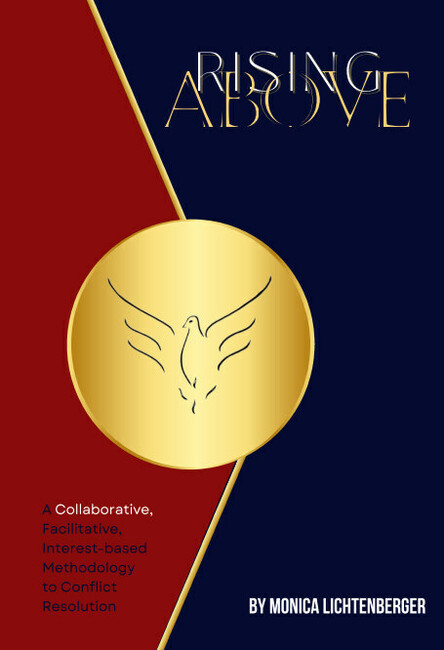
The framework we’re trained in is Collaborative Facilitative Interest-Based Mediation, developed by Monica Lichtenberger in Rising Above. But the experience is simpler than the name: a process where you feel heard, where you stay in control of the outcome, and where the agreement at the end is one that holds.

Mediation can feel unfamiliar before you’ve been through it. Below are answers to the questions we hear most often from individuals, families, and businesses across Southern Colorado. If you don’t see your question here, give us a call at 719-425-9807 or book a free 30-minute consultation.
Mediation is a private, voluntary process in which a neutral third party — the mediator — helps the people involved in a dispute have a productive conversation and design their own resolution. Unlike a judge or arbitrator, a mediator does not decide who is “right” or impose an outcome. And unlike a lawyer, a mediator does not represent either side. The result is a process that is typically faster, less expensive, less adversarial, and more flexible than litigation, and one in which you keep control over the outcome instead of handing that decision to a judge.
We offer mediation and coaching across a wide range of conflicts, including divorce and co-parenting matters, workplace and employment disputes, business and consumer disagreements, HOA conflicts, and nursing home and elder-care disputes. We also provide stand-alone divorce coaching, conflict coaching, and a Mediation Readiness Assessment for people who aren’t yet sure if mediation is the right fit. If you’re not certain whether your situation is one we handle, reach out — if it isn’t a fit, we’ll tell you and, when possible, point you toward someone who is.
It’s the model we practice, developed by Monica Lichtenberger and described in her book Rising Above. Traditional “positional” mediation tends to focus on each party’s stated demands and then split the difference. Interest-based mediation goes deeper — we work to surface the underlying needs, concerns, and priorities driving each person’s position, and then we collaboratively design solutions that address those underlying interests. The result is usually a more durable agreement, because it’s built on what each party actually needs rather than on a forced compromise.
We charge a transparent flat fee for our mediation services, and we do not require a retainer. That means you know what your investment will be up front, with no surprise hourly billing and no large deposit to get started. Pricing varies by service (divorce, workplace, business, etc.) and by the scope of the matter — we’ll walk you through the specific fees during your free 30-minute consultation so you can decide whether to move forward with full information.
You are not required to have an attorney to mediate with us, and many clients don’t. That said, we always encourage parties to seek independent legal advice when their situation involves significant legal rights or obligations — for example, in divorce, child-related matters, or complex business disputes. A mediator is a neutral facilitator, not your lawyer, and can’t give legal advice to either side. If you’d like, your attorney can review any agreement before you sign it, and in some cases attorneys attend mediation sessions with their clients.
Yes. Confidentiality is one of the most important features of mediation, and Colorado law (the Dispute Resolution Act, C.R.S. § 13-22-301 et seq.) provides strong protections for what is said and disclosed during the process. With limited exceptions (such as threats of harm or required reporting under other laws), what is shared in mediation generally cannot be used as evidence in court. We’ll explain exactly how confidentiality works in your matter at the start of the process so there are no surprises.
Most matters resolve in far less time than litigation — often in a single session or a small handful of sessions over a few weeks, rather than the months or years a contested court case can take. Simpler disputes (a single business issue, a focused workplace conflict, a co-parenting tune-up) can sometimes be wrapped up in one meeting. More complex matters, like a full divorce with property and parenting issues, typically take several sessions. Because you’re in control of the schedule, mediation moves at the pace that works for you.
Nothing you’ve said in mediation can be used against you in court, and you’re free to pursue any other option you would have had before — including litigation, arbitration, or simply taking more time to think. Even when full agreement isn’t reached, parties often leave with a clearer understanding of the issues, a narrower list of disputes, and sometimes partial agreements on specific points, which can save substantial time and cost in any later proceeding.
We’re based in Colorado Springs at 4419 Centennial Blvd # 1015, and we serve clients throughout Southern Colorado. We offer both in-person and secure video sessions, so you can choose what works best for your schedule, your comfort, and the dynamics of your case. Virtual mediation is especially helpful when parties live in different locations, have demanding schedules, or simply prefer the comfort of meeting from their own space.
The easiest first step is a free 30-minute consultation. We’ll listen to what’s going on, answer your questions, explain the process and the flat-fee structure, and help you decide whether mediation is the right next step. You can book online, call us at 719-425-9807, or email lance@conflictsolutionssc.com. If you’re not sure you and the other party are ready, ask about our Mediation Readiness Assessment — a low-pressure way to evaluate fit before committing to the full process.
Begin your journey to resolution with a no-cost consultation. Our mediators will explain the process, discuss your specific needs, and show how mediation can lead to effective and peaceful resolutions. Contact us today to schedule your free consultation and take the first step towards resolving your conflicts.
Reach out today to learn more about our mediation services or to schedule a consultation.
Office Location
Conflict Solutions of Southern Colorado
4419 Centennial Blvd # 1015, Colorado Springs, CO, 80907, US